May 5, 2026
Is a Bilingual Programme Right for Your Child? A Parent’s Guide
Wondering if a bilingual programme is right for your child? This guide explores the benefits, what to look for, and how integrated language learning works.
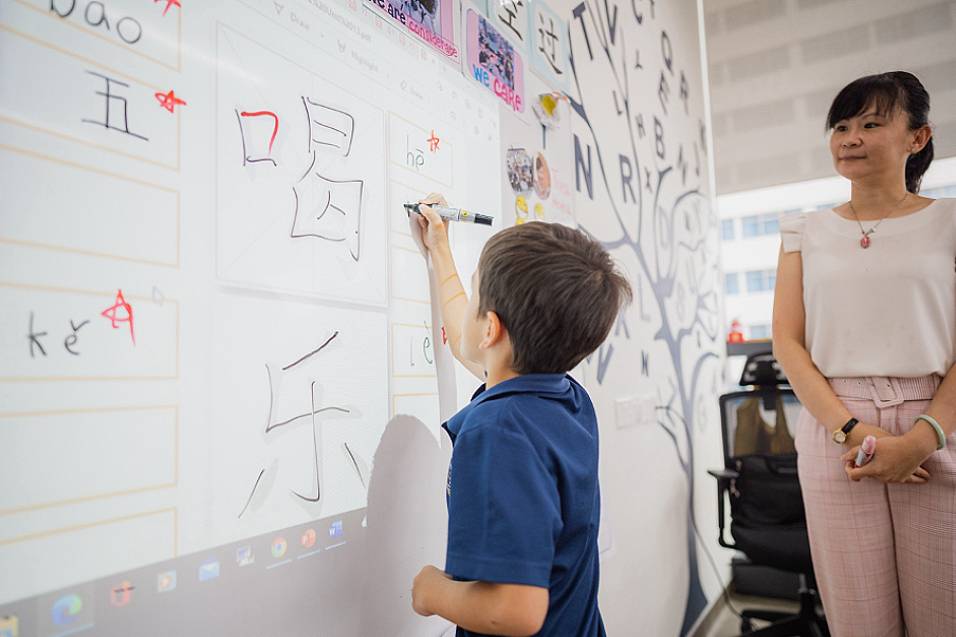
Wondering if a bilingual programme is right for your child? This guide explores the benefits, what to look for, and how integrated language learning works.
Choosing the right school for your child often comes down to more than academics. Many parents today are thinking about how their children will communicate, adapt, and thrive in a multicultural world. Language plays a big role in that, which is why bilingual education has become an increasingly popular option in Singapore.
At the same time, it is natural to have questions. Will your child be able to cope with learning in two languages? Will it affect their confidence or academic progress? And most importantly, is this type of learning environment the right fit for your child’s personality and pace? This guide breaks it all down, so you can decide with confidence.
What Does This Learning Approach Actually Involve?
This approach goes beyond simply learning a second language as a subject. Instead, both languages are used meaningfully throughout a child’s daily learning experience.
In a well-designed setting, students are immersed in both languages across different subjects. Some lessons may be taught in English, while others are delivered in another language such as Mandarin. This allows children to build familiarity and confidence through real usage, rather than memorisation alone.
Over time, children become more comfortable switching between languages naturally, a skill often referred to as code-switching, which reflects real-world communication patterns.
Why More Parents Are Exploring This Option
There is a reason this approach continues to gain traction. It offers benefits that extend well beyond language ability.
1. Stronger Communication Skills
Children in dual-language environments tend to develop better listening and expression skills. They learn to understand context, tone, and nuance across different languages.
2. Cognitive Development
Research has shown that bilingual learners often demonstrate stronger problem-solving abilities, memory, and mental flexibility. Managing two languages encourages the brain to think in more dynamic ways.
3. Cultural Awareness
Language is closely tied to culture. Learning in two languages helps children develop a deeper appreciation of different perspectives, traditions, and ways of thinking.
4. Future Readiness
In a global city like Singapore, being comfortable in more than one language can open doors. Whether in higher education or future careers, bilingualism is a practical advantage.
What to Consider Before Choosing This Pathway
While the benefits are clear, this type of learning is not a one-size-fits-all solution. It is important to think about how it aligns with your child’s needs.
1. Your Child’s Learning Style
Some children thrive in immersive environments, while others may need more time to adjust. If your child enjoys exploration and hands-on learning, they may adapt well.
2. Language Exposure at Home
Consider how much exposure your child already has to the second language. While prior knowledge is not always required, familiarity can help ease the transition.
3. Confidence and Adaptability
Learning in two languages can feel challenging at first. Children who are open to trying new things and are comfortable making mistakes often adjust more smoothly.
4. Support Systems
A strong programme should include structured support, such as differentiated instruction and teacher guidance tailored to each student’s level.
What a Well-Designed Programme Looks Like
Not all dual-language environments are structured in the same way. The quality of implementation makes a real difference.
Here is what to look out for:
- Integrated learning rather than treating the second language as an add-on
- Clear structure in how subjects are delivered across both languages
- Qualified teachers experienced in bilingual instruction
- A balanced approach that supports both language development and academic progress
- Support for different proficiency levels, especially for beginners
When these elements are in place, students are more likely to feel supported rather than overwhelmed.
A Closer Look at Invictus Centrium Square Campus
At Invictus International School’s Centrium Square campus, language learning is thoughtfully integrated into everyday classroom experiences rather than treated as a standalone subject.
Students are immersed in both English and Mandarin through their daily lessons:
- English is the primary language for subjects such as English, Mathematics, Science, Global Perspectives, and Digital Literacy
- Mandarin is integrated across multiple subjects, including Chinese, Music, Art, Physical Education, and the Integrated Chinese Programme
This structure allows students to engage with both languages in meaningful, real-world contexts. Instead of switching between separate “language lessons” and academic subjects, they learn to apply both languages naturally throughout the day.
For many students, this makes the experience feel more intuitive and less forced.
Common Concerns Parents Have
It is completely normal to have concerns when considering this type of education. Here are a few common ones, along with a practical perspective.
- “Will my child fall behind academically?”
A well-structured approach ensures that core subjects remain strong. Language supports learning rather than getting in the way of it.
- “What if my child struggles with one language?”
Most schools provide differentiated support, allowing students to progress at their own pace. Early challenges are common but often temporary.
- “Is it too much for young children?”
Young children are often more adaptable than we expect. Early exposure can actually make language acquisition feel more natural.
Signs It Might Be a Good Fit
Every child is different, but here are some indicators that this environment may suit your child:
- They show curiosity about languages or enjoy learning new words
- They are comfortable interacting with different people and cultures
- They are resilient and willing to try, even when something feels challenging
- They benefit from interactive, hands-on learning rather than rote memorisation
If these traits sound familiar, this pathway could be a positive and enriching experience.
When It Might Not Be the Right Fit Yet
It is also important to recognise when it may be better to wait or consider alternatives.
- If your child is currently struggling significantly with their primary language
- If they feel easily overwhelmed by new environments
- If there is limited support available to help them adjust
In these cases, building a strong foundation first can make a future transition smoother.
Making the Decision with Confidence
Choosing the right learning environment is not about following trends. It is about understanding your child and making a decision that supports their growth, both academically and personally.
Take the time to visit schools, speak to educators, and observe how classes are conducted. Seeing how students interact and learn in real time can give you a clearer sense of whether the environment feels right.
The goal is not perfection. It is to find a place where your child feels supported, engaged, and excited to learn.
Ready to Explore This Learning Environment?
If you are considering this pathway for your child, seeing it in action can make all the difference. At Invictus International School’s Centrium Square campus, language is integrated naturally into everyday learning, helping students build confidence in both English and Mandarin while staying academically strong.
Book a tour with Invictus International School to experience the environment first-hand and speak with educators about how it can support your child’s learning journey.
An Institution by Sing-Ed Corporation.
© 2026 Invictus International School. All Rights Reserved.